From cleaner air in schools to better support programmes, this is how policy shapes daily life for people with asthma and allergies
National Public Health Week highlights the importance of public health policies and science-led action
National Public Health Week is a useful moment to step back and look at how public policy shapes the environments where people live, work, and learn. For the more than 106 million people in the United States living with asthma and/or allergies, policy decisions are not abstract. They influence everyday exposures, access to care, and long-term health outcomes.
The Asthma & Allergy Friendly® Certification Program, a collaborative initiative between the Asthma and Allergy Foundation of America (AAFA) and Allergy Standards Ltd, focuses on helping people make informed choices about products in their homes. But the broader picture matters too. Creating healthier indoor environments is not just about individual decisions. It also depends on strong, science-led public health policy.
Over the past year, AAFA has been active across both state and federal levels, working to advance policies that directly impact people living with asthma and allergies.
Cleaner Air in Schools
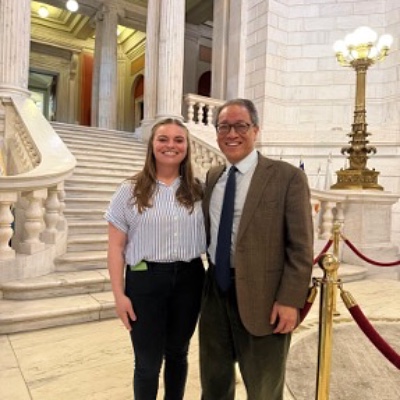
AAFA Ambassador Sierra Ottilie-Kovelman and AAFA President and CEO Kenneth Mendez at the Rhode Island Senate to advocate for improving indoor air quality in schools
One of the most tangible examples of policy in action is indoor air quality in schools. Over the past year, AAFA supported legislation in Rhode Island aimed at improving air quality in school buildings. The bill (S.2873), which passed the Rhode Island Senate unanimously, sets out a structured, science-based approach to addressing indoor air quality.
If enacted, it will establish clear guidelines for measuring air quality, introduce accountability through assessment and reporting, and require improvements in filtration systems.
This really matters. Poor indoor air quality can increase exposure to common asthma triggers such as dust, mould, and inadequate ventilation. In a school setting, that has real consequences. Asthma is a leading cause of school absence. In Rhode Island, 1 in 6 school absences is linked to asthma, and at least two students in every classroom are living with the condition.
Better air quality supports better attendance, improved concentration, and a more consistent learning environment. It is a clear example of how policy decisions translate into day-to-day impact.
Protecting Programmes That Support People
In 2025, proposed budget cuts threatened to eliminate the Centers for Disease Control and Prevention National Asthma Control Program (NACP)), a long-standing initiative that supports asthma education and management across multiple states.
The programme has demonstrated measurable outcomes. People participating in NACP-supported initiatives report fewer emergency department visits, fewer missed days of work and school, and better overall disease management.
AAFA led advocacy efforts to restore this funding, working with a bipartisan group of lawmakers. The result was the reinstatement of the programme as part of the FY 2026 budget agreement.
This is a strong example of what sustained, evidence-based advocacy can achieve. It also highlights how quickly progress can be at risk without continued attention and engagement.
Why This Matters at Home
While these examples focus on policy, they connect directly to everyday environments, including the home.
Indoor air quality, exposure to allergens, and access to effective management tools all play a role in how people experience asthma and allergies. Public health policies help set the foundation, while informed choices at home can build on that.
This is where trusted, science-based information and independently tested products can support people in creating healthier indoor environments.
A Combined Effort
As Jenna Riemenschneider, Vice President of Advocacy and Policy at AAFA, explains:
“Public health policies shape the environments where people with asthma and allergies live, learn, and work every day. Whether it’s ensuring clean air in schools or defending programs that help people manage their disease, AAFA is committed to advancing policies that deliver real, measurable health benefits.”
National Public Health Week is a reminder that improving health is a combined effort. It relies on strong policies, scientific evidence, and practical actions at home and in everyday environments.
For people living with asthma and allergies, these shared efforts can make a meaningful difference, helping to reduce exposure to triggers and support better overall wellbeing.