National Healthy Homes Month 2026: Practical Actions for Healthier Living
Healthy Homes for Everyone: Practical Actions. Shared Solutions. Lasting Impact. This is the theme for National Healthy Homes Month (NHHM) 2026, an annual initiative focused on improving the environments where people live. It brings attention to the connection between housing quality and health, and encourages simple, practical steps that can make a real difference.
A healthy home supports wellbeing in everyday ways. It means cleaner air, controlled moisture, and fewer indoor pollutants. With people spending around 90% of their time indoors, these factors are fundamentally important.
Why Indoor Air Quality Matters
Indoor air quality (IAQ) is one of the most important aspects of a healthy home. Indoor air can be two to five times more polluted than outdoor air, and may contain a mix of pollutants such as dust mite allergen, pet dander, pollen, mold spores, and chemical emissions from everyday products.
For people with asthma and allergies, these exposures can worsen symptoms. Even for those without underlying conditions, poor IAQ can affect comfort, sleep quality, and general wellbeing.
Improving IAQ does not require major changes. Consistent, practical actions can reduce exposure and support a healthier indoor environment over time.
Practical Steps You Can Take
- Clean Effectively and Regularly
Cleaning helps control the build-up of pollutants in the home. Think ‘cleaning for health not just for appearances’. To achieve this:
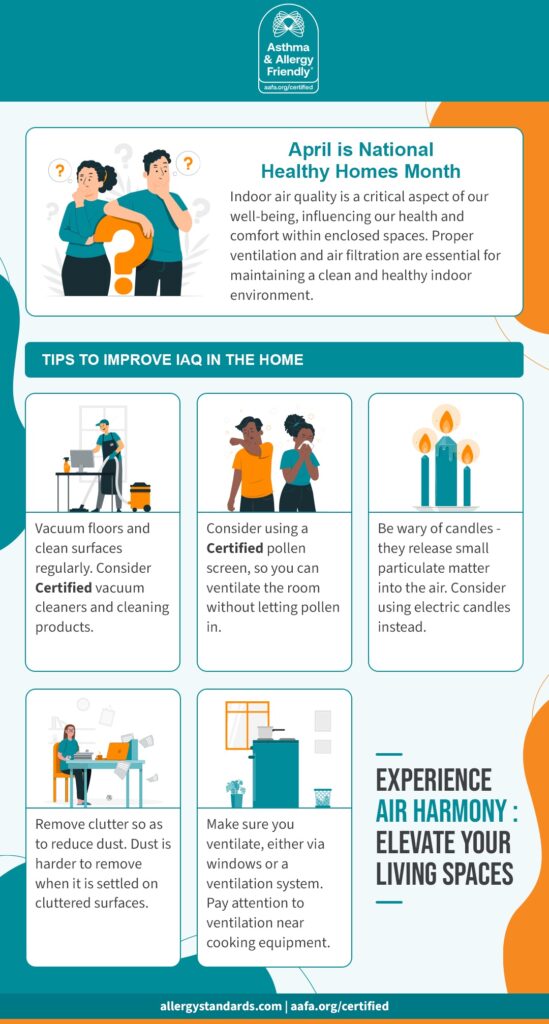
- Vacuum floors and soft furnishings regularly
- Use a damp cloth for dusting to avoid redistributing particles
- Wash bedding frequently at a high temperature to reduce dust mite allergen
- Choose cleaning products that are designed to limit volatile organic compound (VOC) emissions
- Improve Ventilation
Ventilation helps reduce the concentration of indoor pollutants.
- Open windows when possible, particularly during cooking or cleaning
- Use extractor fans in kitchens and bathrooms
- Maintain HVAC systems and replace filters as recommended
For those with pollen allergies, it may be necessary to balance fresh air with strategies that limit outdoor allergens entering the home. In these cases, window-mounted pollen screens can help reduce the amount of pollen entering the home.
- Manage Moisture and Humidity
Excess moisture can lead to mold growth and increased dust mite levels.
- Aim to keep indoor humidity between 40% and 50%
- Address leaks or damp areas promptly
- Use dehumidifiers in areas prone to moisture
Controlling humidity is a simple but effective way to reduce common indoor triggers.
The Role of Third-Party Certification in Choosing Products for your Home
With many products making claims about being “green” or “hypoallergenic,” it can be difficult to know what to trust when choosing products or materials that support a healthier home environment.
Our program helps provide clarity. Products are assessed through independent, protocol-driven testing against defined scientific standards.
The program covers a wide range of everyday products that can influence the home environment, including:
- Air cleaners and HVAC filters, which are evaluated for their ability to reduce airborne allergens
- Vacuum cleaners, assessed to ensure allergens are effectively captured and not released back into the air
- Paints, insulation and flooring, reviewed for chemical emissions and overall performance
- Bedding, tested for durability and the presence of chemicals commonly used in textile production
- Laundry appliances and detergents, which play a role in removing allergens from fabrics
- Cleaning products, evaluated for both effectiveness and emissions
By addressing multiple exposure pathways, this whole-home approach helps consumers make more informed choices across different areas of the home.
A Shared Responsibility
Creating healthier homes extends beyond individual actions. Manufacturers, retailers, and building professionals all influence indoor environments through product design, material selection, and building practices.
At a broader level, initiatives like National Healthy Homes Month highlight the link between housing quality and public health, as well as the importance of access to healthier living conditions for all communities.
Small Changes, Meaningful Impact
Improving the home environment does not need to be complicated. Regular cleaning, good ventilation, and moisture control can all contribute to better indoor air quality.
National Healthy Homes Month is a useful opportunity to take stock of your home and consider where small improvements can be made. Over time, these changes can support a more comfortable and healthier place to live.