Independently tested and Certified washing machines are proven to effectively reduce allergens from fabrics and support better indoor air quality
May is Asthma and Allergy Awareness Month, and it is also Clean Air Month, making it the perfect time to look at how everyday household appliances shape the air we breathe at home. When we think about managing allergens indoors, our minds often go straight to vacuuming or air purifiers. Yet one of the most effective tools for reducing allergens and supporting better indoor air quality (IAQ) is something most of us already use every week: the washing machine.
Washing machines do far more than keep clothes clean. They play a central role in any allergen reduction strategy. From bedding and clothing to stuffed toys, household fabrics can trap allergens, and the right washing machine, used correctly, can help significantly reduce them, benefiting everyone in the home.
With 106 million Americans affected by asthma and allergies, managing indoor exposure to common triggers like dust mite allergen, pet dander, pollen, and mold has never been more important. These allergens build up on soft surfaces and fabrics, where they can be difficult to remove through everyday cleaning. The challenge is also growing: pollen seasons now produce around 21% more pollen than they did in 1990, especially from trees, making allergen management at home even more important.
This article explores how washing machines contribute to reducing asthma and allergy triggers, and how choosing a third-party validated machine, such as one Certified by the Asthma & Allergy Friendly® Certification Program, can improve your home’s indoor air quality for everyone who lives there.
How a Washing Machine Helps Reduce Allergens
Allergens like dust mite allergen, pet dander, and pollen can accumulate on clothing, bedding, soft furnishings, and stuffed toys. Dust mites, in particular, are a major contributor to allergic reactions. These microscopic insects thrive in warm, humid environments like beds and pillows, where they feed on dead skin cells. It is the mites’ waste, not the mites themselves, that triggers the allergic response. Washing these items regularly is one of the most effective ways to reduce dust mite allergen and other irritants from fabrics.
However, not all washing machines are equally effective at allergen removal. To effectively reduce dust mite allergen, a washing machine needs to reach and maintain a temperature of at least 130°F (54.4°C) throughout the entire drum. This temperature is necessary to kill dust mites and ensure that allergens are removed from fabrics. Many washing machines cannot consistently achieve and maintain this temperature, which is crucial for effective allergen control.
The Importance of Certified Asthma & Allergy Friendly® Washing Machines
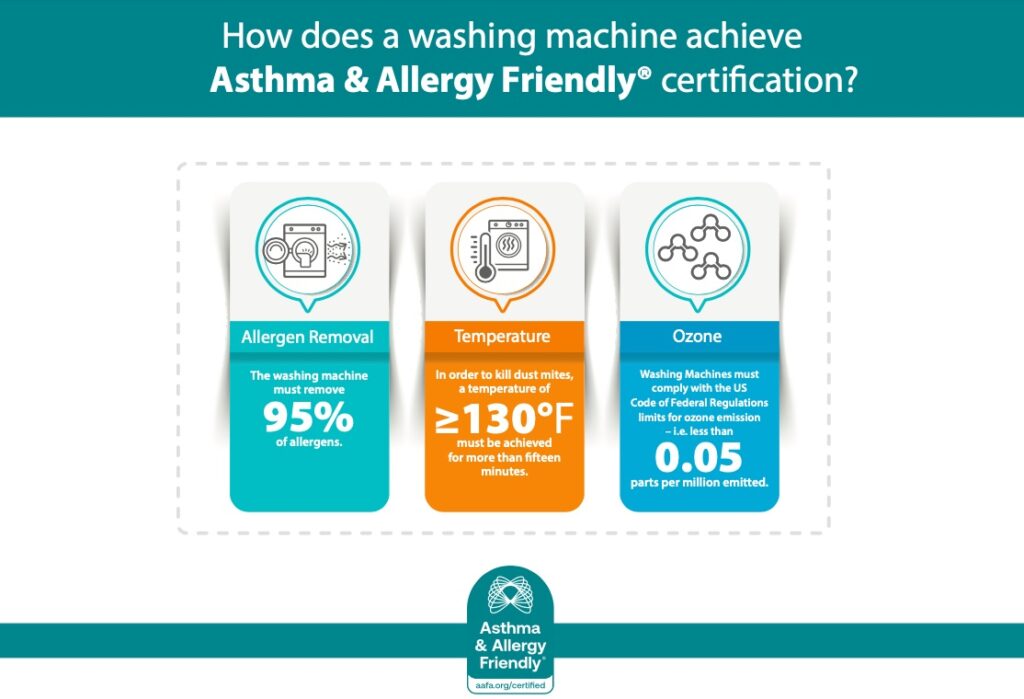
Choosing a washing machine that has been independently tested and Certified by the Asthma & Allergy Friendly®Certification Program gives consumers confidence that it meets defined standards for allergen reduction. Certified washing machines are tested to confirm they effectively remove allergens like dust mite and cat allergens from bedding, clothing, and other washable fabrics. To earn Certification, a washing machine must meet strict requirements, including:
- Allergen and dust mite removal: Certified washing machines are tested to confirm they remove more than 95% of allergens, including dust mite allergen and cat allergen, from clothing and fabrics.
- Consistent high temperature: The machine must maintain a washing temperature of at least 130°F (54.4°C) for a minimum of 15 minutes, throughout the entire drum, not just in one area.
- Indoor air quality considerations: Some appliances can produce ozone as a side effect of operation. A Certified washing machine must demonstrate that any ozone production is at a suitably low level, making it unlikely to negatively impact the indoor environment.
Practical Tips for Allergen Control with Your Washing Machine
To get the most allergen-reducing benefit from your washing machine, here are some practical tips:
- Wash bedding regularly. Wash pillowcases, sheets, and duvet covers on a warm cycle to help reduce dust mite allergen and pet allergens, then use a low tumble dry setting.
- Wash stuffed toys. Dust mites can collect on children’s stuffed toys. Wash them before first use and regularly thereafter (every four weeks is a good rhythm). If they cannot be washed, seal them in a plastic bag and freeze for 24 hours before tumble-drying.
- Ventilate the laundry room. Keep humidity levels below 50% to discourage dust mite growth. Make sure your dryer is properly vented, and clean the lint trap after every use.
- Leave the washing machine door open. After use, leave the door open so the drum can dry out, helping to prevent mold growth.
- Choose Certified or verified detergents. Laundry detergents also play a role in indoor air quality. The Asthma & Allergy Friendly® Certification Program subjects laundry detergents to biological, physical, and chemical testing to confirm they reduce allergens without contributing to poor IAQ.
Our Certified Partner: LG
We are proud to partner with LG, a leader in home appliance innovation. LG has been a pioneer in developing a range of Certified appliances, including washing machines and the innovative LG Styler, reflecting their commitment to creating healthier home environments.
As Adam Whobrey from LG shared:
“Certification is very, very important to our customers, because they need to see that third-party validation. It is one thing when LG says, ‘Hey, this is the technology that we have behind it,’ but it is great when we have our partners that also validate and show that we have that technology as well. We do get a lot of recognition with both the laundry and the stylers and the vacuums for having that third-party certification.”
This third-party validation supports consumer confidence, ensuring that LG’s washing machines deliver on their performance claims. LG’s portfolio approach to certification gives consumers an opportunity to take a whole-home view of allergen control.
Why Certification Matters
Not all washing machines are equally effective at reducing allergens, and marketing terms like “hypoallergenic” are not regulated, meaning they may not be backed by scientific testing. The Asthma & Allergy Friendly® Certification Program provides independent, science-based validation that a product meets defined standards. Choosing a Certified washing machine gives consumers confidence that the product has undergone rigorous testing to support a healthier home environment.
Conclusion
Washing machines play an important role in reducing allergens and supporting indoor air quality. For households managing asthma and allergies, choosing the right machine can make a meaningful difference, and the benefits extend to everyone in the home.
This Asthma and Allergy Awareness Month, and Clean Air Month, take the opportunity to evaluate your home’s laundry routine and consider how a Certified Asthma & Allergy Friendly® washing machine can help create a cleaner, healthier indoor environment. Certified products are independently tested to confirm they effectively remove allergens, maintain performance across multiple wash cycles, and support better IAQ for all. Small changes in how you wash can have a lasting impact on the air you breathe.