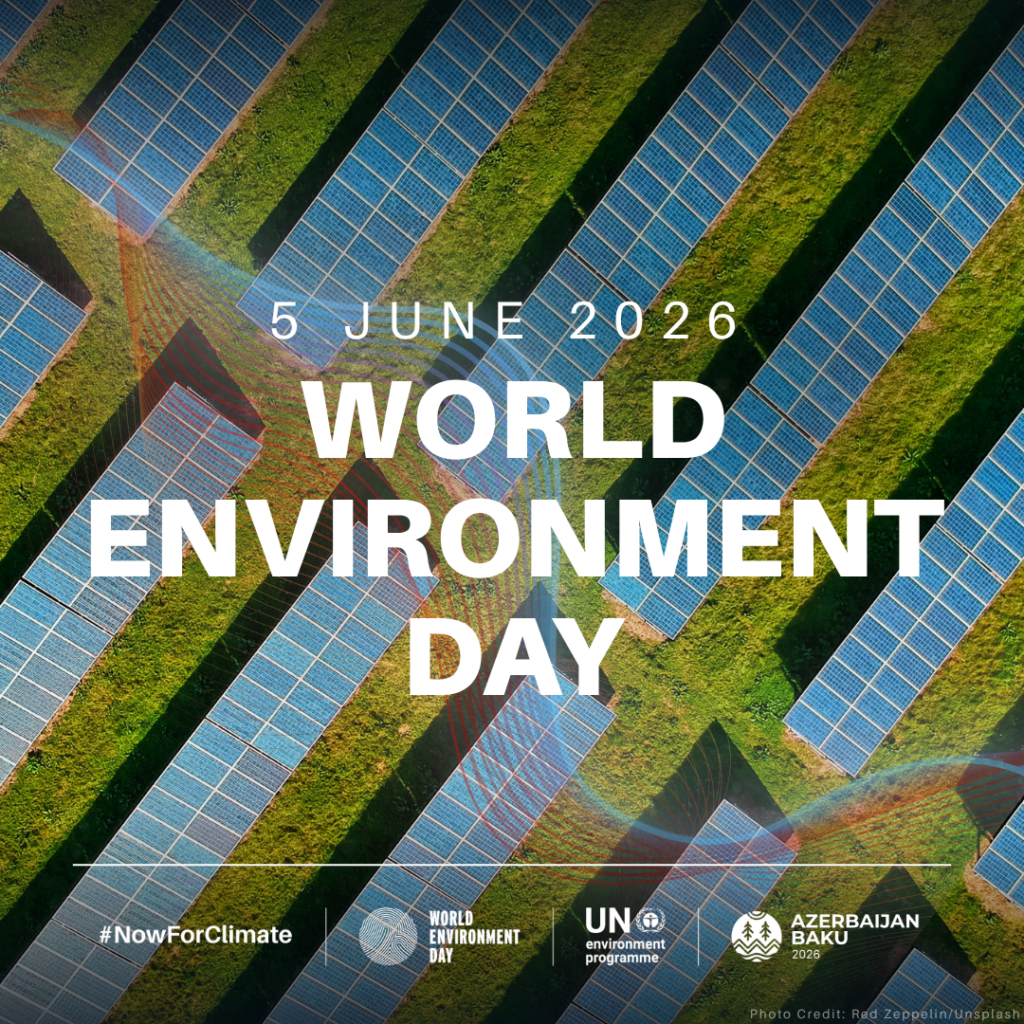
World Environment Day 2026 takes place on 5 June, hosted by the Republic of Azerbaijan in Baku. Photo: Red Zeppelin / Unsplash. Campaign image: UN Environment Programme.
A World Environment Day 2026 perspective from the Asthma & Allergy Friendly® Certification Program
On June 5, 2026, the United Nations Environment Programme (UNEP) marks World Environment Day under the theme “Inspired by Nature. For Climate. For Our Future.” Hosted by the Republic of Azerbaijan in Baku, the 2026 campaign #NowForClimate places climate change at the centre of the global conversation.
Climate change is reshaping the air we all breathe, both outdoors and indoors. For the more than 106 million people in the United States who live with asthma and allergies, those changes are not abstract, they can be felt more sharply in daily life.
The Climate and Indoor Air Connection
People in the United States spend roughly 90 percent of their time indoors, which makes indoor air quality a significant factor in overall health. And outdoor air rarely stays outdoors: pollen, smoke, and pollutants find their way inside through windows, doors, ducts, and gaps in the building envelope.
Three climate-driven trends stand out.
Longer, more intense pollen seasons. Warmer temperatures and changing weather patterns are contributing to longer pollen seasons in many parts of the United States. Some plants are beginning to release pollen earlier in the spring and continuing later into the fall, increasing the length of time people may be exposed. Research also suggests that rising carbon dioxide levels can increase pollen production in certain plants, including ragweed. Once airborne, pollen can travel long distances and enter homes through open windows, doors, ventilation systems, and other openings, affecting indoor air quality as well as outdoor conditions.
Wildfire smoke travelling indoors. In recent years, millions of U.S. acres have burned annually, and the fine particulate matter (PM2.5) they release travels hundreds of miles, finding its way indoors through windows, ducts, and gaps in the building envelope.
Heat, humidity, and mold. Warmer, more humid conditions and extreme weather events can support indoor mold growth, while hotter summers often mean closed windows and more reliance on air conditioning, concentrating indoor pollutants when filtration and ventilation are inadequate.
Practical Steps for a Healthier Home
- Seal leaks around windows, doors, and ducts to reduce infiltration of outdoor pollen, smoke, and pollutants.
- Use HVAC filters and portable air cleaners that are independently tested and certified
- Keep indoor relative humidity between 30 and 50 percent, and address leaks or water damage promptly.
- Designate one room with optimized filtration as a clean retreat during smoke events or high pollen days.
- Monitor outdoor conditions through AirNow and Fire.AirNow.gov, and consider an indoor air quality monitor.
This World Environment Day, the connection is clear: a healthier planet and a healthier home go together.