How Choosing Independently Certified Flooring Can Reduce Allergens, Limit VOCs, and Support Healthier Indoor Environments
May is Asthma and Allergy Awareness Month, designated by the Asthma and Allergy Foundation of America (AAFA) since 1984 to raise awareness about the wide impact of asthma and allergies and to highlight the importance of diagnosis, treatment, and ongoing management of these conditions. With more than 106 million Americans affected by asthma and allergies, May is a meaningful moment to think about the spaces we live in and the materials we choose for them.
May is also National Building Safety Month, with a 2026 theme of “Built to Last,” highlighting how thoughtful planning, informed choices, and resilient building practices help create safer, stronger, and more accessible communities. The two observances overlap naturally, because the products we build with shape the air we breathe long after the project is complete. Flooring is one of those products: as one of the largest surfaces in any home or building, it has a significant influence on indoor air quality (IAQ).
In this article, we explore how flooring choices affect IAQ, why third-party certification matters, and how the Asthma & Allergy Friendly® Certification Program evaluates both resilient and textile flooring to support healthier indoor environments.
Why Indoor Air Quality Matters
Research shows that indoor air can be up to five times more polluted than outdoor air. This is concerning because most of us spend around 90% of our time indoors. Dust mite allergen, pet dander, pollen, and mold spores are common indoor triggers that can exacerbate asthma and allergies. In addition, volatile organic compounds (VOCs), which off-gas from flooring and other building materials, adhesives, cleaning products, and furniture, can further worsen the air we breathe.
For individuals with asthma or allergies, exposure to these pollutants can trigger reactions such as wheezing, coughing, and asthma attacks. Even for those without pre-existing conditions, poor IAQ can cause headaches, dizziness, respiratory irritation, and longer-term health concerns. Healthier IAQ benefits everyone in the household, and flooring is one area where meaningful improvements can be made.
How Flooring Impacts Indoor Air Quality
Flooring, as one of the largest surfaces in any home or building, can have a significant influence on IAQ. Different flooring materials can either contribute to the build-up of allergens and pollutants or help maintain a cleaner environment.
VOCs from Flooring Materials: Many flooring products, and any associated adhesives or chemical treatments, can release VOCs into the air. Exposure to these compounds can cause respiratory irritation, headaches, and more severe health concerns over time.
Allergen Traps: Flooring can trap dust, pet dander, pollen, and mold, which can become airborne when disturbed. If not regularly and thoroughly cleaned, these allergens can accumulate and negatively affect IAQ. Hard-surface flooring such as wood, tile, or vinyl may not trap allergens as easily, but it is still important to select materials that are easy to clean and maintain. Sticky allergen particles can also be more difficult to remove from some types of flooring during cleaning.
Moisture and Mold Growth: Certain flooring materials, especially in humid environments, can absorb moisture and encourage mold and mildew growth. Mold spores are a major concern for individuals with allergies and asthma, as they can easily become airborne and trigger reactions.
Dust and Particulate Matter: Dust and other particulate matter often settle on flooring surfaces, and foot traffic or activity in a room can stir these particles back into the air. Routine cleaning is essential to keep these particles from impacting IAQ.
Flooring Options for Healthier Living Spaces
Choosing the right flooring can make a significant difference in maintaining good IAQ. Here are a few common flooring types and their impact on IAQ:
Hardwood Flooring: Hardwood is a popular choice because it does not trap allergens and is easy to clean. However, dust and debris can settle in the gaps between floorboards, so regular maintenance is key.
Tile and Stone Flooring: These options are non-porous and do not trap allergens, making them a great choice for those with allergies. However, grout lines between tiles can accumulate dirt and allergens, so cleaning the grout is essential.
Vinyl Flooring: Vinyl is easy to clean and does not trap dust or allergens, but some types can emit VOCs. Choosing Certified low-VOC vinyl flooring can help address this issue.
Carpet: Traditional carpet has historically been viewed as less desirable for those with asthma and allergies, but there are now hybrid, textile-based flooring types engineered to give the comfort of traditional carpet with the cleanability of resilient flooring. A low pile is important for allergen removal, as is a backing material that prevents build-up of dust and allergens below the flooring.
Treated Carpet: New treated carpet systems, designed with built-in performance features intended to reduce allergens and limit chemical emissions during real-world use, represent a significant evolution in textile flooring. As covered later in this article, treated carpets can now be evaluated and certified under the Asthma & Allergy Friendly® Certification Program’s updated textile flooring framework, giving consumers who want the warmth and comfort of carpet a science-backed option that supports healthier indoor air.
Why Choosing Independently Verified and Validated Flooring Matters
With a growing focus on health and wellness, many homeowners are now searching for flooring materials that not only look good but also contribute to a healthier living environment. However, the lack of strict regulations around health claims on household products has led to a flood of marketing terms like “eco-friendly,” “green,” and “low VOC,” making it difficult for consumers to know which products genuinely support better IAQ.
This is where third-party testing and certification become invaluable. Choosing flooring that has been independently tested and verified helps ensure that the product meets meaningful standards for IAQ. The Asthma & Allergy Friendly® Certification Program is one such certification that certifies products scientifically proven to reduce exposure to indoor allergens and support better IAQ.
How the Asthma & Allergy Friendly® Certification Program Certifies Flooring
Developed by Allergy Standards Limited (ASL) in collaboration with the Asthma and Allergy Foundation of America (AAFA), the Asthma & Allergy Friendly® Certification Program tests and certifies products, including flooring, to ensure they are more suitable for individuals with asthma and allergies.
Certification goes beyond simple claims and involves rigorous testing that simulates real-life conditions. These tests evaluate the flooring’s impact on IAQ over time. A balanced approach is taken when certifying products, testing for VOCs and other chemicals to identify flooring that does not contain unnecessarily harmful materials. Any necessary chemicals that could cause an allergic reaction are kept at the lowest levels required for functionality.
Here is how the program certifies flooring:
VOC Emissions Testing: The program measures the amount of VOCs emitted by flooring products, ensuring they fall within strict safety limits. This testing includes VOCs from both the flooring material and any adhesives used during installation. Unlike other certifications, the Asthma & Allergy Friendly® Certification Program goes further by assessing emissions during installation and over time, testing levels after both 24 and 336 hours to ensure they remain low.
Allergen Removal Testing: Certified flooring must demonstrate that it is easy to clean and maintain, reducing the build-up of allergens like dust, pet dander, and pollen. The program tests whether standard cleaning methods can remove at least 90% of allergens from the flooring surface, and ensures that cleaning does not release more allergens into the air. Common household allergens, like dust mite and cat allergens, are used in testing.
The Asthma & Allergy Friendly® Certification Program certifies both resilient and soft surface flooring. Resilient flooring includes luxury vinyl flooring, sheet vinyl flooring, vinyl tile, linoleum, and sports flooring.
Traditionally, some textile or soft surface flooring has been viewed as more likely to trap allergens that could easily become airborne. However, new advancements in flooring technology now allow for the comfort of soft surface flooring with the easy-to-clean and durable benefits of hard flooring. Certified Asthma & Allergy Friendly® soft flooring is rigorously tested with real allergens. To earn certification, it must be proven that standard cleaning can remove at least 75% of allergens from the surface while keeping airborne particles low. This means consumers can have the comfort of a soft surface without compromising on IAQ.
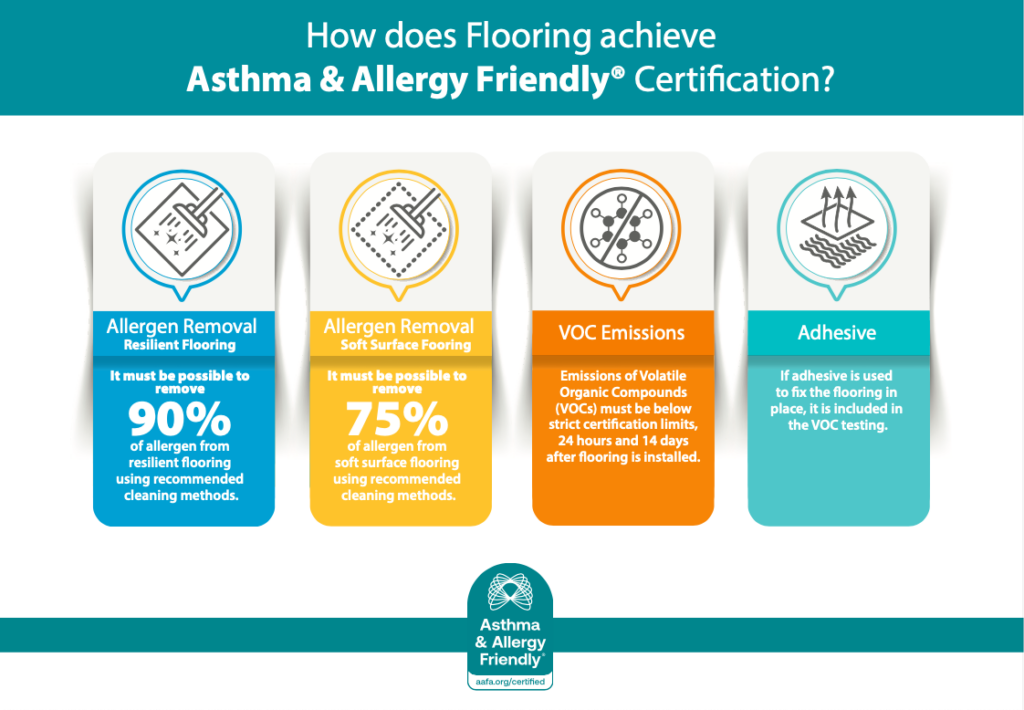
To earn Asthma & Allergy Friendly® Certification, flooring must demonstrate effective allergen removal (90% for resilient flooring, 75% for soft surface flooring), low VOC emissions tested at 24 hours and 14 days after installation, and inclusion of any adhesives in the VOC testing.
Advances in Carpet Technology and the Updated Textile Flooring Standard
Guidance around carpet has historically reflected concerns about allergen accumulation and indoor air quality. However, flooring technologies continue to evolve, and new treated carpet systems are now being developed with specific claims around allergen reduction and IAQ impact.
To address this, Allergy Standards Limited has introduced an addendum to its textile flooring standard, enabling these products to be assessed using objective, performance-based criteria. Treated carpets that meet the requirements of this updated standard may be eligible for the Asthma & Allergy Friendly® Certification Mark. These products are independently tested to demonstrate measurable reductions in common allergens, low chemical emissions, and maintenance of indoor air quality under real-life use conditions. This development reflects the importance of evaluating all flooring types based on verified performance, rather than material category alone.
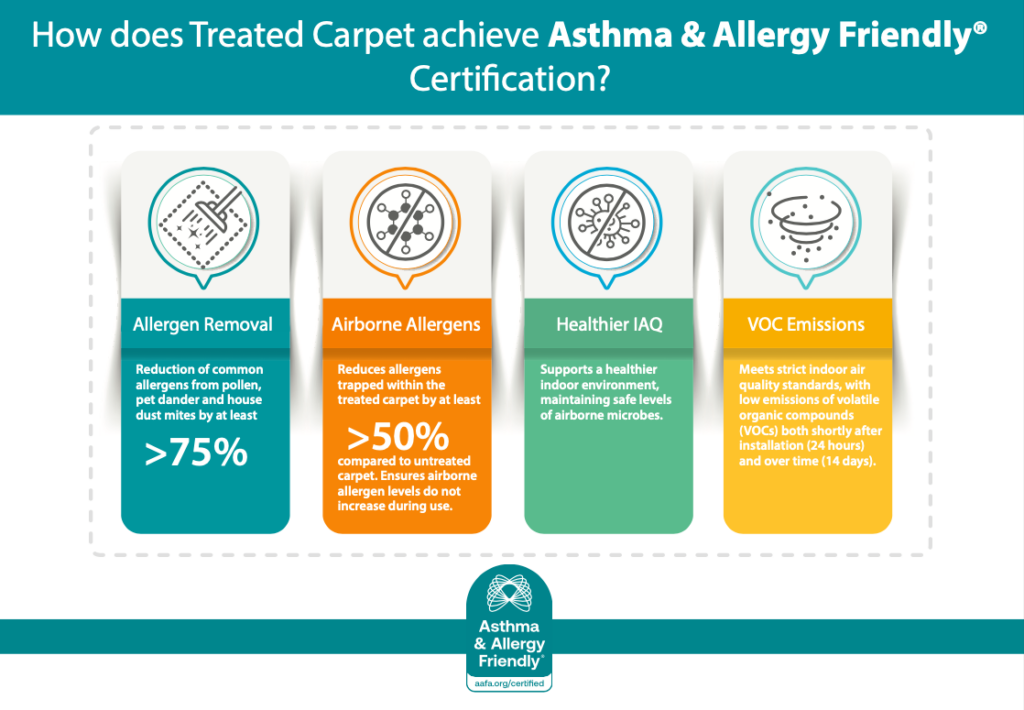
Under the updated textile flooring standard addendum, treated carpet must demonstrate over 75% reduction of common allergens (pollen, pet dander, dust mite), more than 50% reduction of allergens trapped within the carpet, maintenance of healthier indoor air quality with safe levels of airborne microbes, and low VOC emissions at 24 hours and 14 days after installation.
Alignment with LEED and the WELL Building Standard
Certified Asthma & Allergy Friendly® flooring meets LEED criteria for low-emitting materials and comply with WELL Feature X06 Part 1b4.
Certified Asthma & Allergy Friendly® resilient and textile flooring aligns with the U.S. Green Building Council’s (USGBC) LEED program and is eligible for credits for low-emitting materials. Additionally, Certified flooring is compliant with WELL Feature X06 Part 1b4 of the WELL Building Standard. This ensures that creating healthier homes also supports sustainability, reinforcing the “Built to Last” message of Building Safety Month: spaces that are not only comfortable but also better for people and the environment, today and over the long term.
Our Certified Flooring Partners
Tarkett: We are proud to partner with Tarkett, a leader in sustainable and health-conscious flooring solutions. Tarkett’s approach ensures that any indoor air quality claims around their flooring solutions are backed by scientific evidence.
Through their ongoing commitment to the Asthma & Allergy Friendly® Certification Program, Tarkett continues to set the standard in helping create healthier indoor spaces. Their focus on expanding the reach of certification across market segments such as workplaces, healthcare facilities, and educational institutions helps ensure that consumers across many settings have access to flooring products that support healthier IAQ. Their Preserved Treasures™ collection, designed specifically for life-plan communities, includes a Powerbond® hybrid option Certified by the Asthma & Allergy Friendly® Certification Program.
In an interview with our CEO, Dr. John McKeon, Roxane Spears, then Vice President of Sustainability North America with Tarkett, said:
“Our goal? Build social equity from the ground up, one Asthma & Allergy Friendly® Certified floor at a time.”
Working with such a forward-thinking manufacturer continues to make this a strong and impactful collaboration, furthering our shared commitment to improving indoor air quality and supporting healthier living environments.
Mohawk Industries: We are also proud to welcome Mohawk to the Asthma & Allergy Friendly® Certification Program. Mohawk Industries is one of the world’s leading flooring manufacturers, producing carpet, rugs, ceramic tile, laminate, hardwood, stone, and vinyl flooring for residential and commercial spaces around the world.
In April 2026, Mohawk’s SmartStrand® portfolio enhanced with Pur-Ease™ technology became the world’s first treated carpet product to earn the Asthma & Allergy Friendly® Certification under the program’s updated textile flooring standard (ASP:05-03) and its new addendum. Pur-Ease™ uses naturally derived probiotics integrated directly into the carpet to reduce common household allergens, including pet dander, pollen, and dust mite allergen, by up to 75% compared with untreated carpet, with continued allergen reduction over time even after deep cleanings.
Joe Semaan, President of Residential Carpet at Mohawk, said:
“Innovation at Mohawk has always been about more than just creating beautiful, durable products. It is about improving the way people live. Earning the Asthma & Allergy Friendly® Certification for our SmartStrand® carpet with Pur-Ease™ technology delivers on that promise by using natural probiotics to reduce certain common household allergens such as pet dander, pollen, and dust mite allergen. This certification validates our commitment to flooring solutions that truly make a difference.”
This certification represents an important milestone for the textile flooring category. By achieving certification under a rigorous, performance-based standard, Mohawk has demonstrated that treated carpet can offer the comfort and warmth consumers love while measurably supporting better indoor air quality, a meaningful advance for households where carpet has traditionally been viewed with caution.
Conclusion
As the number of people affected by asthma and allergies continues to rise, so does the need for healthier living spaces. Flooring is foundational to both the design and the wellbeing of a home, influencing the air we breathe every day through the materials we choose, the allergens they hold, and the chemicals they emit.
This Asthma and Allergy Awareness Month, as we also mark Building Safety Month and its “Built to Last” theme, consider how the floor beneath your feet contributes to the air you breathe above it. By choosing Certified Asthma & Allergy Friendly® flooring, including new Certified treated carpet systems, you can be confident that your floors have been rigorously tested to reduce exposure to allergens, limit VOC emissions, and support healthier indoor air for everyone in the home.